A SOCIAL JUSTICE BLOG SITE OF THE AMERICAN CREOLE INDIAN NATION

Sunday, August 8, 2010

Murder, spies & voting lies- stolen elections


Tom Feeney


Thomas Charles "Tom" Feeney III, usually known as Tom Feeney (born May 21, 1958), is an American politician from the state of Florida. He represented Florida's 24th congressional district. He was defeated in the 2008 election by Democrat Suzanne Kosmas.


In September 2006, Feeney was named one of the "20 Most Corrupt Members of Congress" in a report by 


Citizens for Responsibility and Ethics in Washington;[10] he was also listed in the first report by the organization in January 2006, when he was one of 13 named members. The organization said "His ethics issues arise from trips he has taken in apparent violation of House travel and gift rules and from his failure to disclosure his ownership of rental property."


In 2006, Feeney was named a "Taxpayer Superhero" by the Citizens Against Government Waste.[7] He received a perfect score from theGrover Norquist's Americans for Tax Reform(ATR). He was named "Guardian of Small Business" by the National Federation of Independent Business (NFIB). The National Taxpayers Union presented Feeney with the "Taxpayers' Friend Award" in 2004[8] and in 2006.[9]


Whistleblower Clint Curtis spills the beans to journalist/blogger Brad Friedman (Bradblog.com) about the election fraud associated with George W. Bush’s first presidential ballot. Beautifully shot, in a style described as “60-minutes-noir”, Patty Sharaf’s acclaimed film has been called the “Alfred Hitchcock of election fraud movies”.


Friedman pokes at the seamy side of democracy, uncovering the story of computer programmer Clint Curtis, who recounts being asked before the 2000 election by a prominent Florida legislator to create vote-rigging software for electronic voting machines. The vote-rigging scandal devolves into a murder mystery, with Friedman shaking down the facts.


With electronic voting machine companies aggressively selling all over the globe, the implications for democracy worldwide are profound.


Thursday, August 5, 2010

American Creole Indian Nation: What is a Creole Indian?


The original inhabitants of the area that is now Louisiana included:


       About Our Maps
*The Atakapa Indians (including the Taensa and

Opelousas)

*The Caddo Indians

*The Chitimacha Indians

*The Choctaw Indians

*The Houma Indians

*The Natchez Indians (including the Taensa and

Avoyel)

*The Tunica Indians


Other Indian tribes driven into Louisiana after Europeans arrived included:


*The Alabama tribe

*The Biloxi tribe

*The Koasati (Coushatta) tribe

*The Ofo tribe


There are four federally recognized Indian tribes in Louisiana today.


Here are the addresses of Louisiana's Indian reservations:


1 Chitimacha Tribe of Louisiana:

PO Box 661

Charenton, LA 70523

http://www.chitimacha.com/


2 Coushatta Tribe of Louisiana:

PO Box 818

Elton, LA 70532

http://www.coushattatribela.org/

3 Jena Band of Choctaw Indians:

PO Box 14

Jena, LA 71342

http://www.jenachoctaw.org/


4 Tunica-Biloxi Indian Tribe of

Louisiana:

PO Box 331

Marksville, LA 71351

http://www.tunica.org/


Other Indian tribes, bands and communities remaining in Louisiana today include:


*Houma Indian Tribe:

20986 Hwy 1

Golden Meadow, LA 70357

http://www.unitedhoumanation.org/


Teaching and learning activities about Louisiana Native American tribes:


Feel free to print these out for classroom use!


*Louisiana Tribes Word Search: Printable puzzle hiding the names of Louisiana's Indian tribes.

*Louisiana Language Greetings: Learn to say "hello" in several Native Louisiana languages.

*Louisiana Native Animals: Learn the Native American names of Louisiana animals.

*Louisiana Indian Facts for Kids: Answers to frequently asked questions about the tribes of Louisiana.

    We currently have pages for the Caddo, Chitimacha, Choctaw, Houma, Natchez, Tunica, Alabama, and Coushatta tribes.


Recommended books about Louisiana Native Americans:


*Louisiana Indians: Introducing Louisiana's Native American history and culture to kids.

*The Historic Indian Tribes of Louisiana from 1542 to the Present: In-depth look at Louisiana's Indian history.

*Louisiana Indian Tales: A book of Louisiana Indian legends, written for younger readers.


Other resources about American Indian history, culture and society in Louisiana state:


*Louisiana Indian History:

     Culture and history on the Native American and creole peoples of Louisiana.

*American Indians in Louisiana:

     Information and pictures about Louisiana Native American tribes.

*The Louisiana Indians:

     Overview of Louisiana archaeology, with photos of ancient paleo-Indian artifacts.

*Native Americans in Louisiana:

     Profiles of eight Louisiana tribes, with biographies of Louisiana Natives.

*The Caddo Indians of Louisiana:

     Online book about this Louisiana Indian tribe.

Tuesday, August 3, 2010

WikiLeaks 'a Clear and Present Danger,' Says Washington Post


WikiLeaks 'a Clear and Present Danger,' Says WaPo


Posted by Soulskill on Monday August 02, @04:31PM
from the rhetoric-reaching-critical-levels dept.


bedmison writes

"In an op-ed in the Washington Post titled 'WikiLeaks must be stopped,' Marc A. Thiessen writes that 'WikiLeaks represents a clear and present danger to the national security of the United States,' and that the US has the authority to arrest its spokesman, Julian Assange, even if it has to contravene international law to do so. Thiessen also suggests that the new USCYBERCOM be unleashed to destroy WikiLeaks as an internet presence."

Reader praps tips an interview with another WikiLeaks spokesman, Daniel Schmitt, who saysthey have no regrets about releasing the Afghanistan documents, and says WikiLeaks is "changing the game." Several other readers have pointed out that WikiLeaks posted a mysterious, encrypted "insurance" file on Thursday, which sent the media into a speculative frenzy over what it could possibly contain.


Monday, August 2, 2010

New South African government threatens press with tribunal


South Africa: Editors Rebuff Media Tribunal Idea


Jocelyn Newmarch


26 July 2010


Johannesburg — SOUTH African editors yesterday vowed to

resist attempts to institute a state-appointed media tribunal andrejected legislation that

they said restricted public access to information.


The South African National Editors Forum (Sanef) said yesterdaythat there was an existing

system of media self-regulation, involving the Press Council and Press Ombudsman. It

vowed to campaign for public support formedia freedom, and urged a "zero-tolerance"

approach to press code violations.


Addressing editors on Saturday, Justice Minister Jeff Radebe said that in exercising the right

to free expression, there was a duty to guard against "furtherance of propaganda for

war and incitement of imminent violence, to name just a few examples".


Mr Radebe's remarks were seen as alluding to a media tribunal, first proposed at the

ANC's Polokwane conference in 2007. But he said the media would not be treated as the

apartheid regime treated black journalists, and invited the media to participate in drafting

legislation.


Mr Radebe said proposals on policy issues -- including section 205 of the Criminal Procedures

Act, which can compel journalists to reveal confidential sources -- would be released this week.

The African National Congress is expected to consider proposals for a tribunal in September.


ANC secretary-general Gwede Mantashe has appealed for calm when discussing the ANC’s

proposed media tribunal and not go on the offensive.


On the contrary we all should, whether we are in and of the news media or not, forcefully 

resist this attempt to curtail freedom of speech.


Let’s be blunt. Whether it comes in the form of a media tribunal or the provisions of proposed 

protection of information laws, what we are talking about is censorship.


It is a matter of freedom of expression and the right of citizens to know.


We, the public, should not let the newspapers in particular collude in their own gradual castration.


As a journalist, I saw the effect of self-censorship often during the apartheid past and the way it

hurts, not newspapers or journalists, but the rights of ordinary people.


I have a specific memory of how self-censorship operates. I think back to the sub-editors’ room

of the Weekend World in 1976.


The World newspaper was owned by the liberal Argus printing group, ultimately owned by Anglo

American Corporation. Working as a sub-editor, I had sent off for printing a page with an article

detailing South Africa’s first military incursion into Angola. It was news to me and I thought the

readers of the Weekend World might like to know about it.


I forget the exact process now, but a senior, white editor had to sign off all pages. He rushed in to

the subs’ room and ordered me to replace the article immediately because it broke the law.


The Defence Act or some other piece of legislation demanded that all stories about the military

had to be cleared by the SA National Defence Force before publication, and the SANDF had

instructed that no news was to be published about the Angolan operation.


We were in effect keeping the news of South Africa’s illegal, undeclared war in Angola secret

from the public, among them the fathers and mothers of the white conscripted soldiers who were

being sent to fight in Angola alongside rebel forces. The senior journalist would have justified his a

ction by reference to the consequences for the newspaper if the story appeared.


But his action was just part of a long-standing process of keeping the news media tame.


He was one of a cadre of conservative journalists who believed they were moral and professional,

but whose co-operation with the authorities was wrapped up in their careers.


A knowledge of the plethora of regulations about what could be published and what could not was

part of a journalist’s tool kit, and an expectation that these should be followed to the letter was part

of the job.


As a young sub-editor I learned a hard lesson about the reality of press freedom in South Africa.

The government eventually closed The World anyway when it stopped being so cautious. You

cannot co-operate with tyranny in the hope of getting a little more freedom.


The example of the censoring of the story about the secret Angolan operation showed how you 

could work as a journalist on newspapers that ostensibly opposed apartheid but were heavily censored

and yet live with a clear conscience.


The journalists at the Weekly Mail newspaper, formed nine years later, took another tack, which

was to stretch the boundaries of obedience and thumb a nose at those same authorities.


Faced with the same situation they would have worked out a way to let the public know that

they were being prevented from publishing something of importance.


Along with other “alternative” newspapers, they focused on publishing uncomfortable truths,

challenging the apartheid authorities to enforce their censorship rather than rely on self-censorship.


There is a strong belief that had all the opposition, English-language newspaper groups stood firm

at an early stage and rejected co-operation with the increasingly absurd demands about what could

and what could not be printed, censorship would not have worked. The government would have

been forced to back down, or taken steps so extreme it would have hurried along the fall of the regime.


The suspicion at the time was that those who complied actually found aspects of apartheid

rather agreeable, and preferred mowing their perfect lawns to thinking about what was happening

in the townships and certainly preferred not to upset the government.


So now what is it exactly that the ANC wants from the news media? Some agreement on a 

mechanism to stop the news media making the ANC uncomfortable in some areas in 

exchange for freedom-to-publish in other areas?


Let’s not be distracted by a couple of corrupt journalists who accepted pay for taking sides.

If this is common, as is claimed, no regulation is going to prevent it. Competition among news media

is the only protection, along with vigilance by editors who don’t want the very worth of their

organisations’ reporting questioned.


Many journalists would rather say “okay, take your best shot” rather than collaborate again.

Impose a media tribunal, if you like, and bear the national and international opprobrium. Don’t expect

us to help you put censorship in place, or give it any legitimacy. Even those among us who are outraged

by the conduct of some our colleagues will smother our disagreements for the sake of solidarity

and defence of freedom.


A media tribunal will have an unintended effect. There is, in a sense, an information market,

where restricting supply of real news increases its value. The news will come out, and when it does

it will be more damaging than ever. If you want to dull the news down, make information freely 

available. A story about cabinet ministers driving cars worth more than R1 million is sensational, but 

not half as sensational as when someone has tried to keep it a secret.


It is embarrassing to government because instinctively we know it is wrong for supposed servants

of the people to indulge in opulence when many of those they are supposed to serve are desperately

poor. And it does not matter whether such luxury is sanctified by government handbooks or by custom

here or anywhere else in the world.


If it were not wrong, publishing it would not matter in the least, and those who did publish such

stories would be laughed at. The way to stop damaging stories appearing in the news media is

to stop supplying the material for it through actions that other people might think questionable, not

to insist we all keep quiet about these things.


Censorship or self-censorship will also give some journalists, made lazy by the free flow of

information, purpose once again. Others will be happy to toe the line.


Moreover, no censorship can target only one form of media: why should newspapers be

especially regulated rather than books, websites, plays and other forms of mass communication?


What would happen if newspapers fell silent on certain issues is that other media would be opened

up. Desktop publishing, a novelty in the 1980s, allowed the alternative news media to flourish.

Other technology will do the same thing now, whether it is the internet or cellphones.


The implication is that censorship cannot work without curbing the freedom of speech of the individual.

If the government is determined to go down this path, the real loser will be the ordinary citizen, whose

right to know will be curtailed on the one hand, and whose right to speak freely limited on the other.


Related Posts


One Response to “The press must be free, not dom”


First you have the idealists and they set up democracy.


Then come the politicians and they find democracy inconvenient so they restrict it.


After them come the thugs and they replace democracy with something like the system

democracy replaced.


So far, democracy in SA hasn’t even lasted 20 years. Look north to get an idea what’s coming next.


Shirley Sherrod & the invention of race in America


In Shirley Sherrod's FULL video, she speaks of a time when "race" did not exist here in America.  


There were simply rich people and poor people. Here is a link to her FULL video.  Also, please read of why and how the rich invented race.  It's called "Bacon's Rebellion".  Never again were so-called whites and so-called blacks to come together in such a way, for a human common cause-just as it was designed by it's narrow agenda architects.  


Were these rich guys far-sighted geniuses? 


Timothy Breen on the relationship between black slaves and white indentured servants


Q: Given that there is a situation of black and white indentured servants, how did they begin to interact or deal with one another? Is there any sense of a commonality that crosses over differences of race or ethnicity?
Timothy BreenA: There are many ways that human beings divide themselves up. Class is one, [and] gender, race, ethnicity. There's a number of ways that people divide themselves up. And in early Virginia, race was a category that people recognized. Black people recognized difference, and sometimes, I would even argue, celebrated difference. But in this highly competitive, depressingly abusive world, poorer whites and poorer blacks -- people who were marginalized in this system of dependent labor -- oftentimes reached out to each other in ways that suggest that, at least in the first 50 or 60 years of Virginia, ...people of African background and English background were able to work together in ways that, again, in later period of American history, were impossible.


Timothy H. Breen


William Smith Mason Professor of American History
Northwestern University


Bacon's Rebellion (1675-1676) and the beginning of 

the racial caste system


Virginia Governor Sir William Berkeley had worked to establish peace with the Indian tribes and successfully negotiated a settlement in which lands east of the Blue Ridge Mountains were reserved for the white settlers. However, during the 1640s and 1650s, the burgeoning population began to spill over into Indian lands west of the mountains. This clear violation of treaty obligations led to deadly clashes between the races.


After the restoration of Charles II to the throne at the end of the English Civil War, Parliament passed the Navigation Acts of 1660-63. The tobacco planters in Virginia were no longer able to sell to customers in France, and Dutch ships were prohibited from trading with Virginia. This was not a new concept; mercantilism was based on the assumption that the mother country should receive most of the benefits from the colonies.


Throughout the 1660's, due to the Navigation Acts, tobacco prices were painfully low and Virginia planters struggled economically. The House of Burgesses passed the first official codes to establish perpetual slavery for blacks, but the costs of producing tobacco remained too high compared to the prices paid for the annual crops. Governor William Berkeley coopted the gentry on the Council, and avoided calling a new election for the House of Burgesses between 1661-1676. As a result, there was no political outlet for the unhappy planters. Not surprisingly, the frustrations would be vented in other ways.


In 1673, Nathaniel Bacon, a distant relative of Governor Berkeley, emigrated from England under murky circumstances and set up a small plantation on the James River. He rose rapidly in public esteem and was appointed to the governor’s council. The Indian issue soon polarized the two men.


The administration of Governor Berkeley became unpopular with small farmers and frontiersmen, because of the following reasons:


-Restrictions on the right to vote — the institution of a new land ownership requirement,


-Higher taxes


-Low tobacco prices


-A pervasive sense of subordination to an aristocratic minority


-Lack of protection from Native American attacks


Berkeley was not opposed to fighting Indians who were considered enemies, but attacking friendly Indians, he thought, could lead to what everyone wanted to avoid: a war with "all the Indians against us." Berkeley also didn't trust Bacon's intentions, believing that the upstart's true aim was to stir up trouble among settlers, who were already discontent with the colony's government.


When Bacon threatened to act without authorization, Berkeley declared him a rebel. The response was a public wave of support for Bacon, frightening Berkeley enough to finally schedule an election for a new House of Burgesses. Bacon was elected, and Berkeley let him take his seat on the Council briefly. Bacon quickly left Jamestown, rallied a mob, and attacked innocent Occaneechi, Tutelo, and Saponi Indians. He pillaged their trading base at modern-day Clarksville at the confluence of the Dan and the Roanoke (Staunton) River, then marched back to the capital. The House of Burgesses, intimidated by the mob, passed legislation demanded by Bacon. The governor fled, along with a few of his supporters, to Virginia's eastern shore.


Each leader tried to muster support. Each promised freedom to slaves and servants who would join their cause. But Bacon's following was much greater than Berkeley's. In September of 1676, Bacon and his men set Jamestown on fire.


Bacon died of a "bloody flux" (very likely dysentary) before he and Berkeley met in battle. His forces dissolved without his charismatic leadership, and the General Assembly quickly repealed most of the liberal laws it had passed.


Berkeley's response was very harsh, hanging nearly two dozen men and seizing their estates to compensate his allies whose plantations had been plundered by Bacon's rebels. Charles II is reported to have been surprised at Berkeley's repression, saying "That old fool has hanged more men in that naked country than I have done here for the murder of my father." Charles recalled Berkeley to England, where the governor died.


Bacon's Rebellion demonstrated that poor whites and poor blacks could be united in a cause. This was a great fear of the ruling class -- what would prevent the poor from uniting to fight them? This fear hastened the transition to racial slavery. It's no coincidence that the next series of slave codes, the laws condemning blacks to permanent and hereditary slavery and creating the racial caste system in the colonies, were enacted in Virginia within 5 years of the end of Bacon's Rebellion.


The Slave Codes (1680-1705):


Slave Laws Reflect racism and the Deliberate Separation of Blacks and Whites. Color becomes the Determining Factor. Conscious efforts to police slave conduct rigidly.


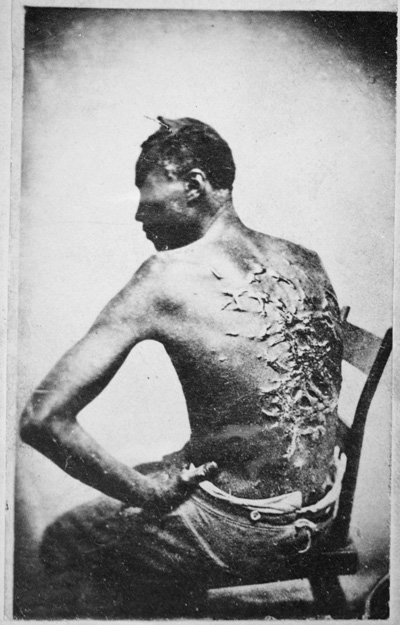
1680 -- Prescription of thirty lashes on the bare back "if any negroe or other slave shall presume to lift up his hand against any Christian."


1680's -- Development of a separate legal code providing distinct trial procedures and harsher punishments for negroes.


1680's -- Status of the child is determined by the status or condition of the mother.


1680's -- Severe punishment for slaves who leave their master's property or for hiding or resisting capture.


1691 -- Banishment for any white person married to a negroe or mulatto and approved a systematic plan to capture "outlying slaves."


1705 -- All negroe, mulatto, and Indian slaves shall be held, taken, and adjudged to be real estate.


1705 -- Dismemberment of unruly slaves was made legal.


Bacon's Rebellion helped bring about the racial caste system that would be the constant festering wound in the flesh and soul of the USA to the present day.


REPRINT: Never ever give up on love – by Courtney Collins


Never ever give up on love – by Courtney Collins


Originally Posted on : 08-06-2009 | By : Admin | In : Relationships


Tags: , ,  


Read this incredible story of Little Rock news anchor, Courtney Collins. We are proud to publish her story and are looking forward to hear from you.


————–


At age 24, I had my whole life planned. I was engaged to the guy I’d spent six years getting to know. Mature life choice? Check! I was going to be married at 25. Reasonably, I’d have a few years to sink into my new, wifely role before the child bearing days pressed in. Kid one at 29, kid two atproposal-pic-7 32… perfect! I’m young enough to have peppy mom energy but old enough to avoid mom-out-of-college syndrome. By the time the children are both out of the nest, I’m 50. I have plenty of creative energy but a respectable amount of wisdom and life experience.


It’s so refreshing to know, at age 24, exactly how life will unfold. What’s equally invigorating, but less than pleasant, is when that entire plan heartbreakingly unravels in a matter of weeks.


I met a boy my freshman year of college and fell in love. We were nuts about each other in that giddy, 18-year-old way. We stuck together through four years of school, the post-college job search, and dutifully kept things going long-distance when our fledgling careers threw us in different states. We were happy and we wanted to spend the rest of our lives together. When he proposed after five years and nine months of dating, I was ready to take the next step. I said yes, we set a date, we picked our wedding party. I couldn’t wait. Everything was going just like we had planned.


And that’s why I suddenly felt like the lone woman on a sinking ship when my fiancé asked if we could postpone things.


He had just started working as a sportscaster in Florida and I was finishing up my reporting job in Texas, so he wondered if we could wait until I moved to Fort Myers before nailing down a firm timeline....READ REST OF THE STORY HERE

Wednesday, July 28, 2010

REPRINT: DIRTY DEALINGS IN LITTLE ROCK PART 2...


These are the stories I'm working on for part 2 in an ongoing series called DIRTY DEALINGS IN LITTLE ROCK:


Corruption not only sucks among the everyday cop. It also sucks royally when it comes to Little Rock Police Department Internal Affairs. I will be exposing the disgusting bad cop behaviour of one Sgt. "bring my LRPD car home with me to Greenbrier" Kyle King of the Internal Affairs Division. Sgt. King is quite the dirtbag to think that he can violate my civil rights as an state and federally protected American Creole Indian AND as a citizen of this southern city, and not expect consequences at some point.


HINT: CITY OF LITTLE ROCK POLICE REPORT #2007-143797 


It shall be VERY difficult for this corrupt internal affairs cop to deny my documented allegations against him along with his internal affairs cop snitches Officer Lori Smith & "Snitch Mitch". Now that Shannon Dewayne Cox is in bed with them, it is becoming more obvious what the common thread is.


A drunk serving manager at a cheesy piano bar called Willy D's, hell Shannon Dewayne Cox LIVES with the woman named Carla. I have evidence on them, boy do I. It's called a DWI Police report & much, much more. Kyle King had a chance to deal with it, instead he chose to be corrupt and under-handed. He had an opportunity to deal with a public safety threat BEFORE it happened, but he was more concerned about some B.S. pictures that Willy D's took of my drink cooler on the sidewalk. Good call cop. I had pictures of drunks being tossed in the street by Carla's thugs, Kyle didn't give a crap and I nearly got killed by Willy D's drunk driver. BOY!! ABC, ABC.


PLEASE MAKE ME PROVE IT!


Sgt Reggie Parks, an upstanding officer at the River Market witnessed the event with NUMEROUS other fine officers at the kiosk during RIVER FEST. He, Sgt. Parks witnessed these events on the very first day of the River Fest where he, Sgt. Kyle King and one of his Internal Affairs "snitches" (not my words). Officer "Snitch Mitch" by way of officer Lori Smith, of whom NO officer wants on their shift.


They are known within the force to be REAL buddy-buddy with the civil rights violating Sgt. King of Internal Affairs. They all decided to exact their revenge upon myself and my nation that fateful evening. MORE TO COME.


HINT: CITY OF LITTLE ROCK POLICE REPORT #2007-143797


Also Officer Mark Fisher was relieved of duty last week under allegations of theft at a local Sam's Club. Apparently, he was caught red-handed with an unpaid backpack sittin' in his truck. MORE TO COME.


We are also going to talk about the Little Rock so-called"Empowerment Zone" and the Little Rock Fire Dept. MORE TO COME


Real Time Web Analytics